
WELCOME BONUS 300%
UP TO €2000 + 100
FREE SPINS
UP TO €2000 + 100
FREE SPINS
Home → Blackjack
Blackjack at Casino Gamblezen: Variants, Rules and Payouts
Which hands are excluded from Surrender?
The Late Surrender rule reduces the house edge by exactly 0.08 percentage points for the player, a specific mathematical advantage found in high-limit variants like Liberal Vegas Strip. This benefit allows the player to forfeit half the wager after the dealer checks for blackjack, effectively cutting losses on weak starting totals. The financial consequence is a direct reduction of the casino's long-term hold on that specific bet type. Early surrender is significantly more valuable at minus 0.6 percentage points but remains extremely rare in current offerings.
Standard rules dictate that players cannot surrender if the dealer holds a natural blackjack, as the hand resolves immediately before any player options are available. This exclusion applies universally across all deck counts, including the six-deck and single-deck games where surrender might otherwise be permitted. The restriction ensures the dealer's advantage is locked in before the player can mitigate further loss. Consequently, the timing of the decision is strictly bound to the post-check phase of the deal.
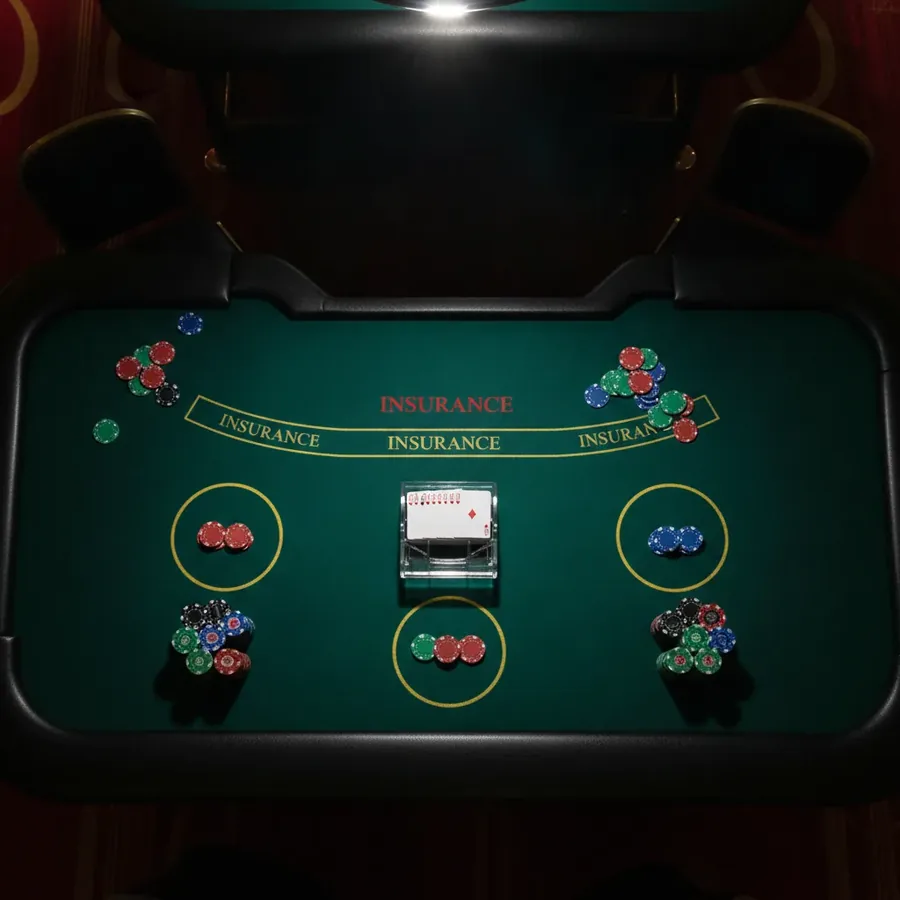
Blackjack Party runs with two hosts
Evolution provides the Blackjack Party live table, which features two distinct hosts to maintain a lively atmosphere throughout the session. The betting range for this specific variant spans from 1.00 EUR up to 1,000 EUR per round, accommodating mid-to-high stakes players. This limit structure differs from other tables that may reach higher maximums, defining the ceiling for individual wagers. The dual-host format aims to increase engagement compared to standard single-dealer streams.
How much time is left for the decision?
Quantum Blackjack Plus Live by Playtech offers a betting window ranging from 1 to 5,000 EUR, featuring quantum multipliers that can reach up to 1,000x on three-card 21 combinations. This high-stakes environment requires rapid decision-making, as the multiplier events trigger unpredictably during the hand resolution phase. Players must execute their split or double actions within the standard dealer timer, which typically allows only seconds for input. The potential for massive payouts demands precise adherence to optimal strategy under pressure.
Splitting Eights vs Standing on 16
Splitting eights is a fundamental basic strategy move that transforms a hard 16 into two separate hands starting with eight, significantly improving the expected value. Standing on 16 against a dealer seven or higher is statistically inferior, leading to a higher probability of busting or losing the original stake. The decision hinges on the dealer's upcard and the specific deck penetration, with DAS (Double After Split) offering additional flexibility. Executing the split correctly reduces the house edge contribution from this weak total.
Double Down vs Simple Hit on 11
Doubling down on an 11 is the most aggressive and profitable move, as it doubles the initial wager when the player has the highest probability of drawing a ten-value card. Hitting instead leaves money on the table, as the expected return on a double is substantially higher than a simple hit or stand. The DAS rule allows players to double again after splitting pairs, further enhancing the value of this strategy. This action directly impacts the overall RTP, pushing it closer to the theoretical maximum of 99.72%.
Blackjack variants at a glance
| Variant | Payout | House edge | Rule | Bet range |
|---|---|---|---|---|
| Blackjack 6 Decks, S17, DAS, DOA, Auszahlung 3:2, Basisstrategie | 99.54% | 0.46% | Dealer steht auf Soft 17; Verdopplung auf jeder Zweierkarte; Verdopplung nach Split erlaubt; keine Aufgabe. Basisstrategie ist für diesen Wert zwingend | Blackjack 3:2, normaler Gewinn 1:1, Insurance 2:1 |
| Blackjack Insurance / Versicherung (6–8 Decks) | 92.53% | 7.47% | Separate Nebenwette bis 50% der Hauptwette, wenn der Dealer ein Ass hat. Basisstrategie schreibt IMMER Ablehnung vor (außer Karten zählen bei True Count ≥ +3). Bei einem Deck Vorteil ≈ 5.88% | Insurance 2:1 |
| Blackjack Auszahlung 6:5 statt 3:2 (6 Decks) | 98.15% | 1.85% | Ersatz von 3:2 durch 6:5 fügt exakt +1.39 Prozentpunkte zum Vorteil des Casinos hinzu – stärker als jede andere Regeländerung. Bei $10 Einsatz zahlt Blackjack $12 statt $15. | Blackjack 6:5, Gewinn 1:1 |
| Blackjack Liberal Vegas Strip (liberale Regeln, 3:2) | 99.72% | 0.28% | Günstigste Regelkombination: S17 + DAS + Resplit + Late Surrender. Standardabweichung 1,15 | Blackjack 3:2, Gewinn 1:1 |
| Blackjack Ein Deck, klassische Regeln, 3:2 | 99.85% | 0.15% | Weniger Decks = niedrigerer Vorteil; ein Deck gibt ca. −0.48 Prozentpunkte gegenüber 8 Decks. Oft durch 6:5 Auszahlung kompensiert. | Blackjack 3:2, Gewinn 1:1 |
| Blackjack Surrender (Late Surrender) – Regel-Effekt | n.a. (Regel-Modifikator) | −0.08 Prozentpunkte | Spieler gibt Hand nach Dealer-Blackjack-Prüfung auf, verliert die Hälfte des Einsatzes. Verbessert RTP um ca. 0.08 Prozentpunkte. Early Surrender ist wesentlich wertvoller (bis −0.6 Prozentpunkte), aber extrem selten. | Rückzahlung 50% des Einsatzes |
What Hole Card Means at a Live Table
The Quantum Blackjack Plus Live table by Playtech utilizes a specific hole card mechanism to determine game outcomes for high stakes wagers up to 5.000 EUR. This procedural rule ensures that the dealer's second card remains hidden until all player actions are completed, maintaining standard blackjack integrity during high-volume betting sessions.
Unlike Infinite Blackjack by Evolution which also caps bets at 5.000 EUR, this Playtech variant integrates quantum multipliers affecting the final payout structure significantly more than standard rules do. Players must account for these variable multipliers when calculating expected returns on their substantial bankrolls placed on these high-limit digital tables.
The house edge for Quantum Blackjack Plus Live stands at 99.57% RTP when players employ optimal strategy, providing a theoretical return rate slightly higher than many other live dealer options available. High rollers should verify their strategic adherence closely since any deviation from perfect play directly reduces the long-term profitability of their wagering activity.
Infinite Blackjack uses the Six Card Charlie
Infinite Blackjack offered by Evolution features an automatic win condition known as the Six Card Charlie rule, allowing players to win instantly if they draw six cards without exceeding twenty-one points. This unique mechanic applies across unlimited seats at the table and influences strategic decisions regarding hit or stand probabilities during extended gameplay sequences.
The base game offers an RTP of 99.47%, while side bets like Any Pair or Bust It provide additional wagering opportunities with distinct payout structures separate from the main hand outcome. High limit players often utilize these supplementary bets alongside their primary action, diversifying risk exposure across multiple potential winning combinations within each round.
Maximum stakes reach 5.000 EUR per hand, creating significant variance due to the combination of high limits and the probabilistic nature of drawing multiple cards under the Six Card Charlie rule. This structural feature allows experienced players to leverage probability advantages over longer sessions compared to tables lacking such favorable automatic win conditions.
What a Natural Blackjack Practically Pays Out
A natural blackjack typically pays out at 3:2 odds, meaning a 100 EUR bet yields 150 EUR in profit upon achieving the best possible starting hand combination. This standard payout ratio is crucial for high rollers seeking optimal returns, as deviations significantly impact the overall expected value derived from successful hands played consistently.
Tables offering 6:5 payouts instead of 3:2 increase the house edge substantially, reducing the return on a 100 EUR bet to only 120 EUR profit despite identical hand rankings. Avoiding such unfavorable variants is essential for professional players who rely on precise mathematical edges to sustain their bankroll against the casino's statistical advantage over time.
Blackjack Ein Deck games provide a superior 99.85% RTP with a mere 0.15% house edge, making them ideal for skilled players utilizing basic strategy effectively. The reduced deck count lowers the casino's inherent advantage considerably compared to multi-deck games, thereby maximizing the potential profitability for those mastering optimal decision-making processes.
Side Bet Every Round: Budget Lasts 30 Rounds
Insurance represents a secondary wager available when the dealer shows an ace, paying 2:1 if the dealer possesses a ten-value card for a natural blackjack. This side bet carries a steep 7.47% house edge, drastically reducing the overall RTP to 92.53% and rendering it mathematically unfavorable for most strategic approaches employed by serious players.
Betting limits for insurance generally allow wagers up to fifty percent of the original stake, enabling high rollers to hedge their primary position against potential dealer blackjacks effectively. However, consistent use of this protective measure erodes long-term profits due to the negative expected value associated with its elevated house advantage relative to standard gameplay outcomes.
Basic strategy dictates always rejecting insurance unless counting cards reveals a true count greater than or equal to three, where the probability shifts sufficiently to justify the risky expenditure. For non-counting players, avoiding this costly proposition preserves capital integrity and maintains the theoretical return rates established by the core game mechanics without unnecessary deductions.
Check table limit before the first bet
Quantum Blackjack Plus Live accommodates maximum bets reaching 5.000 EUR, requiring high rollers to ensure their individual wagers fall within this strict upper boundary before placing chips. Exceeding this limit results in rejected transactions, disrupting the flow of high-stakes action and potentially causing missed opportunities for advantageous betting situations during active rounds.
In contrast, Blackjack Party hosted by Evolution restricts maximum stakes to 1.000 EUR, offering a different volatility profile suited for players preferring lower exposure per hand despite the lively atmosphere. Understanding these distinct ceiling variations helps manage bankroll allocation efficiently across multiple tables without encountering unexpected restrictions that could hinder strategic execution plans.
Table selection directly impacts variance management, as higher limits allow larger absolute wins but also amplify potential losses during unfavorable streaks significantly more than lower-limit alternatives do. Careful consideration of these financial boundaries ensures sustainable engagement with premium gaming products while maintaining control over total session expenditures and risk parameters effectively.
Early Surrender is removed from many tables
Blackjack Surrender allows a player to forfeit half the bet after the dealer checks for blackjack, improving RTP by approximately 0.08 percentage points compared to standard rules. This specific rule modifier reduces the house edge but is significantly less valuable than Early Surrender, which can lower the advantage by up to 0.6 percentage points but remains extremely rare in modern online casinos. High rollers seeking optimal returns must verify table settings, as the absence of this feature increases the cost of play.
Standard variations like Blackjack Liberal Vegas Strip rely on a combination of favorable rules including Soft 17 stands and Double After Split to maintain a low house edge of 0.28 percent. Without Late Surrender, players lose the ability to mitigate losses on marginal hands, effectively shifting the expected value back toward the casino's favor. The 50% payout upon surrendering remains a fixed mechanic, but its strategic utility diminishes when Early Surrender options are entirely absent from the lobby.
Infinite Blackjack offers an RTP of 99.47 percent with unlimited seats, yet it typically excludes early surrender mechanics found in older land-based variants. Quantum Blackjack Plus Live provides multipliers up to 1,000x but maintains a 99.57 percent RTP under optimal strategy, relying on side bets rather than surrender rules for variance. Players analyzing high-stakes environments must account for these structural differences, as the removal of surrender clauses directly impacts long-term bankroll management.
Splitting tens costs expected value: better stand
Resplitting Aces improves the player's RTP by 0.08 percentage points, while allowing Double After Split enhances it by approximately 0.14 percentage points in six-deck games. These positive modifiers are crucial for maintaining the low house edge of 0.46 percent found in standard 6-deck configurations with Soft 17 standing rules. However, splitting tens is universally discouraged in basic strategy because it breaks a strong 20 into two weaker hands, statistically increasing the house advantage.
The house edge for Blackjack 3:2 payouts sits at 0.28 percent when liberal rules apply, whereas switching to 6:5 payouts adds exactly 1.39 percentage points to the casino's advantage. This massive increase outweighs any potential gain from splitting pairs or doubling down aggressively on weak hands. A $10 bet paying 6:5 yields only $12 instead of $15, demonstrating how rule changes disproportionately affect high-volume players.
Dealer Hits Soft 17 (H17) worsens the RTP by 0.22 percentage points, making strict adherence to basic strategy even more critical for minimizing losses. When combined with the prohibition against splitting tens, the mathematical expectation for a high roller decreases further unless they utilize advanced card counting techniques. The standard deviation of 1.15 indicates moderate volatility, meaning proper discipline is required to survive variance without deviating from optimal play.
Infinite Blackjack vs Classic Seven-Seat Table
Infinite Blackjack by Evolution accommodates unlimited players at a single table, offering an RTP of 99.47 percent with a betting range of 1 to 5,000 EUR. This format eliminates seat contention issues common in classic seven-seat tables, allowing high rollers to join instantly without waiting for an empty chair. The inclusion of four side bets such as Any Pair and 21+3 provides additional wagering opportunities alongside the main game action.
Quantum Blackjack Plus Live by Playtech features quantum multipliers up to 1,000x on three-card 21 combinations, targeting players who seek higher variance outcomes. With a maximum bet limit of 5,000 EUR, it matches Infinite Blackjack in stake capacity but introduces random multiplier events that disrupt traditional strategy application. The RTP of 99.57 percent assumes optimal strategy, though the volatile nature of multipliers can lead to significant short-term swings.
Blackjack Party by Evolution caps bets at 1,000 EUR, limiting its suitability for elite high rollers compared to the 5,000 EUR limits of other live dealers. While it offers a lively atmosphere with two moderators, the lower maximum stake restricts the potential return on investment for large bankrolls. Players prioritizing high limits should select Infinite or Quantum variants, as the party theme does not compensate for the reduced betting ceiling.
Clicked Too Late: Hand Is Automatically Held
Auto-hold mechanisms trigger when a player fails to make a decision within the allotted time, forcing the system to hold the current hand or fold based on preset logic. This automated intervention removes strategic agency, often resulting in suboptimal plays that increase the effective house edge beyond the stated theoretical values. For high rollers, losing control over split or double decisions can significantly erode expected value over thousands of hands.
The house edge for standard insurance bets stands at 7.47 percent, making them highly unfavorable unless the player employs card counting with a true count of +3 or higher. Auto-hold systems do not recognize card counts, automatically rejecting or accepting insurance based on generic parameters rather than deck composition. This limitation ensures that even skilled players cannot leverage timing advantages when using automated play features.
Table games contribute only 10 percent toward bonus wagering requirements, meaning every hour spent at blackjack generates minimal progress compared to slots which contribute 100 percent. Consequently, auto-play strategies designed to speed up hand volume become counterproductive if they prevent manual optimization of splits and doubles. The 300 percent welcome bonus up to €2,000 requires careful turnover planning, as inefficient play at the table accelerates bonus forfeiture through increased house edge exposure.
Live Table vs RNG Table: Speed and Limits
RNG Blackjack variants typically offer faster hand speeds due to the absence of live dealer interactions and physical card shuffling processes. High rollers may prefer RNG for rapid progression, provided the software supports high maximum bet limits.
Live dealer tables like Infinite Blackjack impose a 1 to 5,000 EUR betting range, setting a hard cap on individual wagers regardless of player status. Quantum Blackjack Plus Live mirrors this 5,000 EUR upper limit, ensuring consistency across high-stakes live offerings from major providers like Evolution and Playtech. These limits define the maximum possible loss per hand, structuring risk management for professional players utilizing aggressive staking plans.
Insurance bets in live games pay 2:1 but carry a house edge of 7.47 percent, drastically reducing overall return unless countered by card counting skills. Since live dealers reveal cards sequentially, players have more information than in RNG games but less time to act before auto-hold triggers. The combination of slower pace and rigid betting limits makes live tables suitable for strategic play, whereas RNG suits those seeking volume and speed.
Contact
Live - online chat
Banking









Providers












Gamblezen Casino 2026